
SMOKING KILLS: We see that warning printed on every cigarette pack, bold and unapologetic. And yet, people smoke. Why?

Health is never as simple as 1+1=2. It’s fragile, shaped by what we eat, how we live, and the emotions we carry. Yet entire industries thrive on sabotaging it. Cigarette companies, for instance, have built billion-dollar empires by selling a product that chips away at human life with every inhale. They don’t just sell tobacco; they sell addiction, banking on people’s pain, stress, and vulnerability — while the warning “Smoking kills” sits ironically printed on every pack. They market relief, calm, and “coolness,” when in reality they’re selling disease and death — with the truth printed right there on the packet, ironically, as if that tiny line of text absolves them of responsibility.
According to the World Health Organization, globally, tobacco causes a staggering number of deaths—over 7 million annually, with nearly 1.3 million of those being non-smokers exposed to second-hand smoke. What makes it worse is that the majority of the world’s 1.3 billion tobacco users, about 80% live in low- and middle-income countries, where families already struggle with healthcare costs and basic needs. For many, money that could go to food, education, or shelter ends up being spent on cigarettes – because tobacco is designed to be addictive.
Smoking isn’t just a personal tragedy—it’s a systemic one. It contributes heavily to cancers, heart disease, respiratory illnesses, and more.
In the U.S. alone, cigarette smoking and exposure to tobacco smoke cause about 480,000 premature deaths every year. That’s nearly half a million families broken every single year. Of those deaths, 36% are from cancer, 39% from heart disease and stroke, and 24% from lung disease. The truth is brutal: smokers face mortality rates three times higher than people who never smoked. And cigarette companies know it.
NATIONAL CANCER INSTITUTE
This got to me because my dad was one of them. He was the healthiest 64-year-old you could meet – no ailments, no signs of weakness – just a simple, happy family man. But he couldn’t quit smoking – It helped him focus, especially when he was stressed about his loved ones. That cigarette, that tiny stick, held him till his very last breath. The doctors called it a “pulmonary cardiac arrest.” For me, it was the cruel irony of watching a strong man, my dad, leave us with a cigarette butt between his fingers. I remember making card after card, requesting dad to stop this one thing. He tried. But capitalism got to him before I could. My dad succumbed to the unnecessary commodity that apparently helps the economy grow at the cost of a human’s deteriorating health.
Cigarettes don’t just harm the lungs. They leave fingerprints everywhere — cancers of the lung, oesophagus, throat, stomach, pancreas, kidney, bladder, cervix, colon. They cause heart disease, stroke, diabetes, osteoporosis, and even vision loss. They inflame the body, weaken the immune system, and worsen everything from asthma to arthritis. They even affect reproductive health: women who smoke are at higher risk of miscarriages, premature births, and babies born with abnormalities, while men who smoke are more likely to suffer erectile dysfunction.
And it’s not just smokers who pay the price. Secondhand smoke kills too. It causes 7,300 lung cancer deaths every year among non-smokers in the U.S., and around 34,000 deaths from heart disease. Children exposed to it develop asthma, ear infections, pneumonia, and even face slower lung growth. The U.S. Surgeon General estimates that simply living with a smoker increases a nonsmoker’s risk of developing lung cancer by 20–30%.
So, when my dad passed, my grief wasn’t just personal. It was systemic. He wasn’t just another “statistic.”
He was part of an industry’s calculated profit margin.
When Grief Shows Up in the Body
At 19, I thought I could outrun grief. I flew back to Sydney, pretending life would resume. But grief doesn’t disappear. It hides, then erupts.
One night at a party, a single glass of wine turned into a full-blown panic attack. My chest tightened, my heartbeat raced, my face flushed. I couldn’t breathe. Exactly the way my father must have felt in his final moments. I thought I was dying. That night was only the beginning.
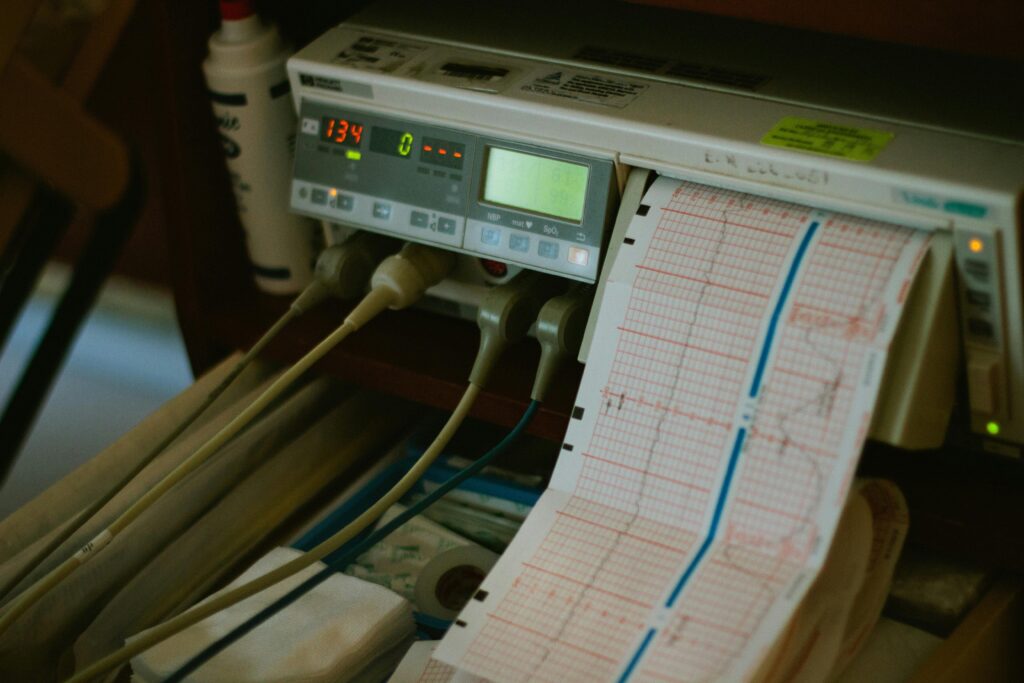
For seven long months, my body betrayed me with waves of chest pain, dizziness, and fainting spells. Doctors ran ECGs and scans — all normal. “You’re healthy,” they said. But I didn’t feel healthy. Inside, I was broken. I had succumbed to an unusual paranoia due to severe health anxiety that threatened to climb to hypochondria, if not managed at the root level.
My Turning Point
But when nothing seemed to work, I did what most of us do when we’ve lost control – I prayed. Harder than ever before. To every God, to the Universe, to whoever was listening. I turned inward. I began journaling, meditating, and practicing gratitude. I started listening to podcasts on healing, spirituality, and emotional resilience. I treated it like a survival kit – because it was.
Slowly, painfully, things shifted. My body began to trust me again.
And then, the world shut down. COVID-19 hit. The very symptoms that had haunted me – shortness of breath, chest tightness, dizziness – were suddenly everywhere on the news. But here’s the twist: I wasn’t afraid anymore. I didn’t spiral like before – although I was a bit nervous.
When a friend asked me how I managed to stay calm while the whole world was paranoid, I laughed and said, “Maybe my timeline was just different.”
But deep down, I knew the truth: it was the work I had put into myself. The journaling, the meditation, the faith over fear. That inner shift had healed me more than any pill or test ever could. Because now, I wasn’t running away. I had started to accept the truth and make peace with it.
Grief is a long road. Anxiety doesn’t vanish overnight. But embracing holistic health – mind, body, and spirit – gave me back my life. I learned that healing isn’t about running from pain. It’s about walking through it, one breath, one prayer, one page in the journal at a time.

This is the part cigarette companies don’t sell you: Health is not just physical. It’s emotional, mental, spiritual. And when you suppress grief, the body speaks it out loud. Experts say grief triggers our fight-or-flight response, flooding us with cortisol and adrenaline, leading to chest pain, nausea, immune suppression, and sleep disruption. It literally rewires the nervous system — especially the vagus nerve, which regulates the heart, breath, and digestion. I was living proof of it.
Why this matters?
I share this because nowadays I hear so many cases where people feel physical strain despite a good seven hours of sleep. They feel uneasy even after a good workout session. Now I understand how “our body keeps the score”. Most of the time, it’s not our body, but our mind that has not processed a loss or a trauma – loss of a loved one, a job, a relationship, or even the loss of our own self to this world that demands running on autopilot rather than living consciously.
The point of this long write-up is to show how important health is. In India, I am met with so many news headlines where people in their 30s and 40s are experiencing serious heart issues especially after or during workouts. It’s time to act consciously and responsibly.
My dad’s last breath was stolen by an industry that thrives on human suffering. But his story, and my healing, remind me of this truth: we always have a choice.
- To choose faith over fear.
- To choose balance over breakdown.
- To choose life over addiction.
“Every cigarette lights up a billion-dollar industry—and burns away human lives.”
Here’s where the ethics hit home for me.
- Exploitation of vulnerability → Cigarette companies know stress and trauma push people toward smoking. Their ads have historically glamorized “coolness” and “calm,” while never showing the cancer ward.
- Deliberate deception → For decades, companies suppressed and denied research proving the link between smoking and disease.
- Targeting the powerless → From flashy campaigns aimed at teenagers, to aggressive marketing in poorer countries with weake6
- health systems — the playbook has always been profit first, people last.
- The moral paradox → Governments tax cigarettes, earning billions in revenue, while acknowledging openly that these products kill.
Health is never as simple as 1+1=2. It’s not a straight line, but a complex web of biological algorithms constantly at play. The food we eat, the thoughts we entertain, the emotions we suppress or express — all of it leaves fingerprints on our bodies. Sometimes it shows up as energy and vitality, and sometimes as exhaustion, illness, or unexplained symptoms. Health isn’t just about the absence of disease; it’s the silent conversation between body, mind, and spirit, reminding us that balance is everything.
Because if we don’t, someone else is already making that calculation for us. And their equation isn’t about your health; it’s about their profit.